
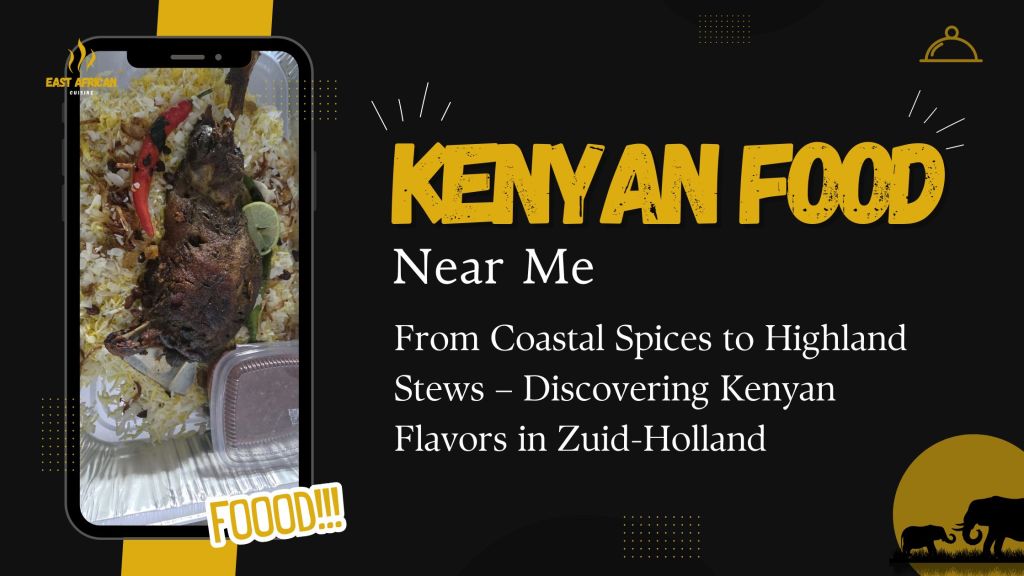
From Coastal Spices to Highland Stews – Discovering Kenyan Flavors in Zuid-Holland
If you’ve been searching for “Kenyan food near me” in Zuid-Holland, you’ve probably noticed something: until recently, there wasn’t much to find. For over a decade, one or two locations in The Hague stood nearly alone, where Kenyan hospitality met Dutch curiosity over plates of slow-cooked stew, crisp samosas, and flaky chapati. But in the past year, Rotterdam’s East African Cuisine has brought Swahili coastal cooking: aromatic biryani, hand-pulled mandi, cardamom-dusted doughnuts into catered events, street food boxes, and the everyday eating rhythms of the Maasstad.
So what is Kenyan food actually like? And where can you experience it in The Hague and Rotterdam? Here’s what you need to know.
What Makes Kenyan Food Unique?
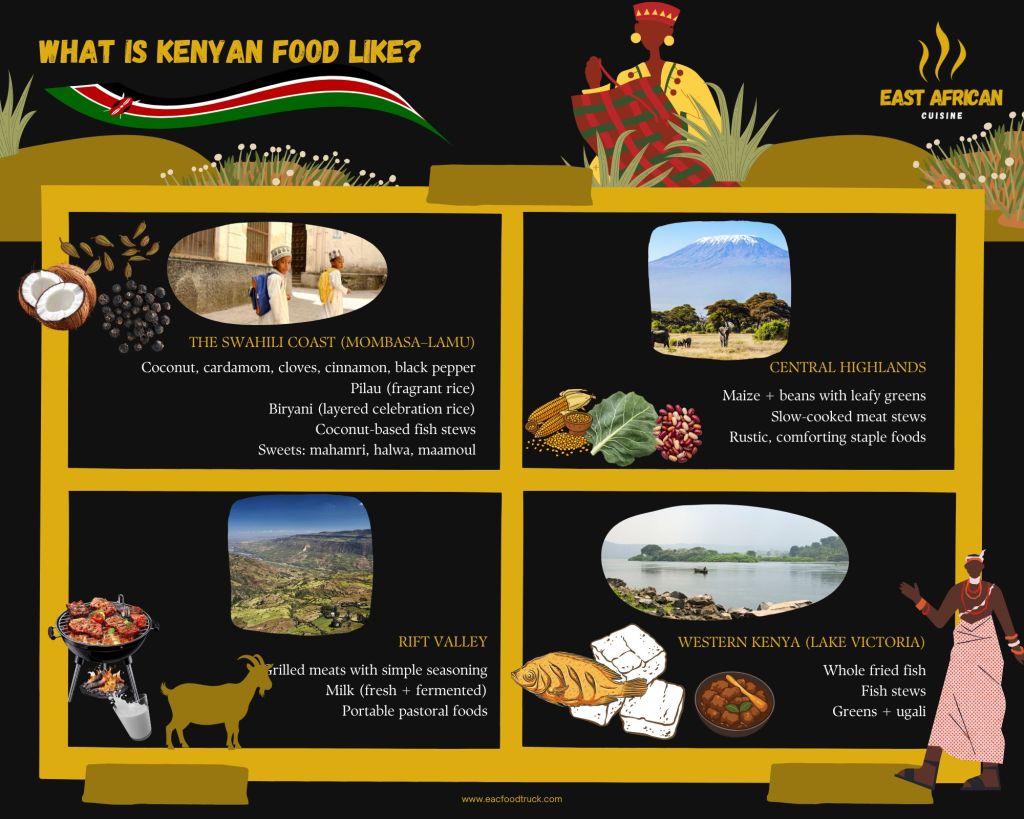
Kenyan cuisine isn’t one thing – it’s a conversation between regions, each with its own ingredients, techniques, and cultural influences. What lands on your plate in Zuid-Holland reflect centuries of trade routes, migration patterns, and agricultural abundance across four distinct food regions.
The unifying principle: most Kenyan meals balance three elements – a starch (ugali, rice, or chapati), a protein (meat, fish, or beans), and cooked vegetables – seasoned with aromatic spices that warm rather than burn. Heat comes from fresh chilies added at the table, not baked into every dish.
The Swahili Coast: Where Spice Routes Met the Sea

Along Kenya’s Indian Ocean coastline – from Mombasa to Lamu – centuries of maritime trade left a pantry rich with coconut, cardamom, cloves, cinnamon, and black pepper. Arab dhows brought dates and rosewater. Persian traders carried saffron. Indian merchants introduced the layered logic of biryani and pilau.
What to expect:
- Pilau: A fragrant one-pot rice dish where meat and vegetables cook together, each grain absorbing cloves and cardamom
- Biryani: The celebration version: parboiled rice and slow-simmered meat stew layered and steamed together, often with goat or chicken
- Coconut-based stews: Fish or prawns in tomato and garlic, finished with coconut milk that captures the closeness of the ocean
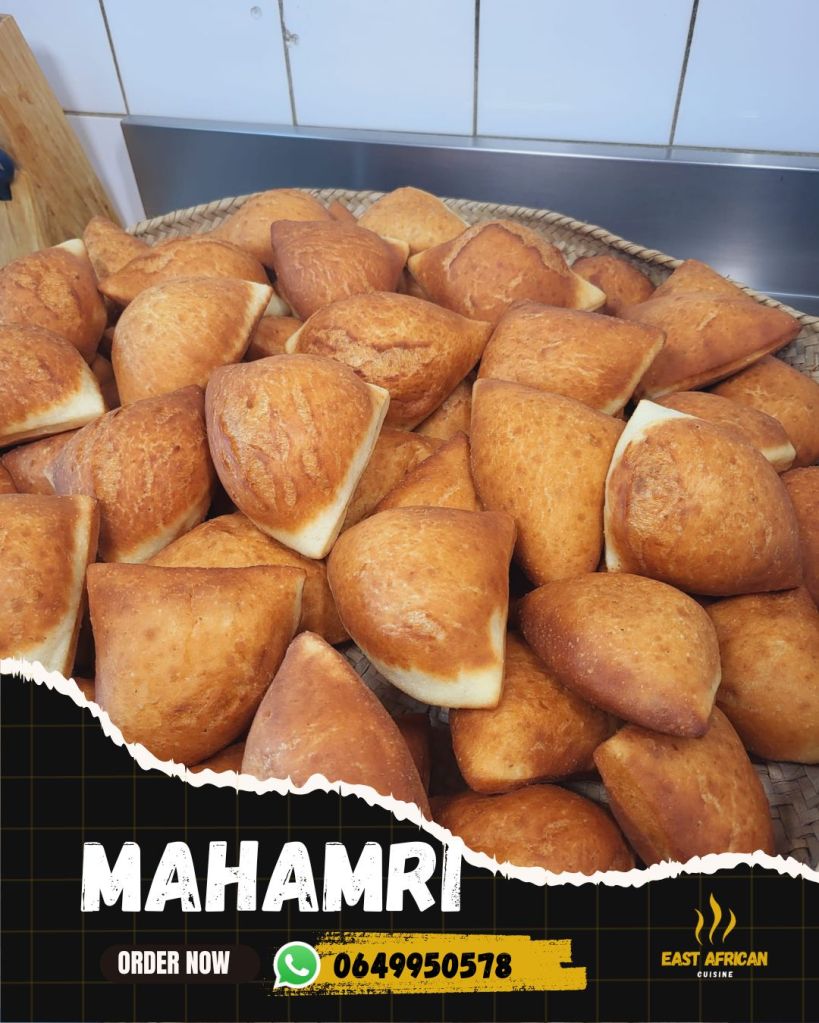
- Sweets and snacks: Mahamri (cardamom doughnuts), halwa, Maamoul (date-filled cookies), and Swahili doughnuts served at breakfast and tea time
In Rotterdam, East African Cuisine leans heavily into this coastal identity. While their catering menus feature elegant rice meals like biryani and mandi, they also showcase home favorites and street food like samosas, chapati, pakoras, fritters, and sweet breads – the kind of spread you’d find at a Mombasa tea stall.
The Central Highlands: Comfort Food from Fertile Ground

Travel inland to Kenya’s Central Highlands – home to Kikuyu and Meru communities – and the food changes with the altitude. Here, volcanic soils grow maize, beans, potatoes, pumpkins, and leafy greens. The cooking is less about complex spicing and more about the deep satisfaction of well-cooked staples.
What to expect:
- Maize and beans cooked together until soft and rustic, served with sautéed greens (sukuma wiki – collard greens – or amaranth)
- Slow-cooked meat stews: Beef, goat, or chicken simmered with onions, tomatoes, and restrained seasoning – closer to Dutch stoofpot than to curry
- Straightforward, nourishing plates that don’t require explanation
This highland template appears in most Kenyan restaurants across the Netherlands: a long-simmered meat dish paired with rice or chapati and greens. It’s the most immediately familiar, substantial, but not heavy.
The Rift Valley: Pastoral Traditions

The Rift Valley, associated with Maasai and Kalenjin pastoral communities, brings a different logic: food built around herding life. Milk (often fermented), simple grain porridges, and meat roasted over open coals with minimal seasoning define this region.
What to expect:
- Grilled meats seasoned simply with salt, where flavor comes from the quality of the animal and wood smoke
- Practical, portable foods that travel well: sour milk, dried grains, roasted meat
While Dutch Kenyan restaurants don’t recreate ceremonial Rift Valley dishes, the influence shows up in mixed grills and simply seasoned meat platters served alongside spiced rice or chapati – a nod to pastoral tradition adapted for urban palates.
Western Kenya: Freshwater Fish and Garden Greens

Near Lake Victoria, the table turns toward freshwater fish and abundant vegetables. Markets in cities like Kisumu are famous for whole fried tilapia – crisp-skinned and served with ugali and a chunky tomato-onion relish.
What to expect:
- Whole fried fish (bones and all) or fish stewed in tomato sauce
- Traditional greens boiled or lightly sautéed with onions
- Direct, honest cooking that doesn’t hide behind elaborate sauces
Chefs in Zuid-Holland adapt these patterns using local European fish – bream, perch – cooked in Kenyan styles. A whole fried fish with ugali and greens might not have come from Lake Victoria, but it carries the same straightforward, generous spirit.
What You’ll Actually Eat: Key Dishes to Know
When you visit a Kenyan restaurant in The Hague or Rotterdam, these are the dishes you’ll see again and again:
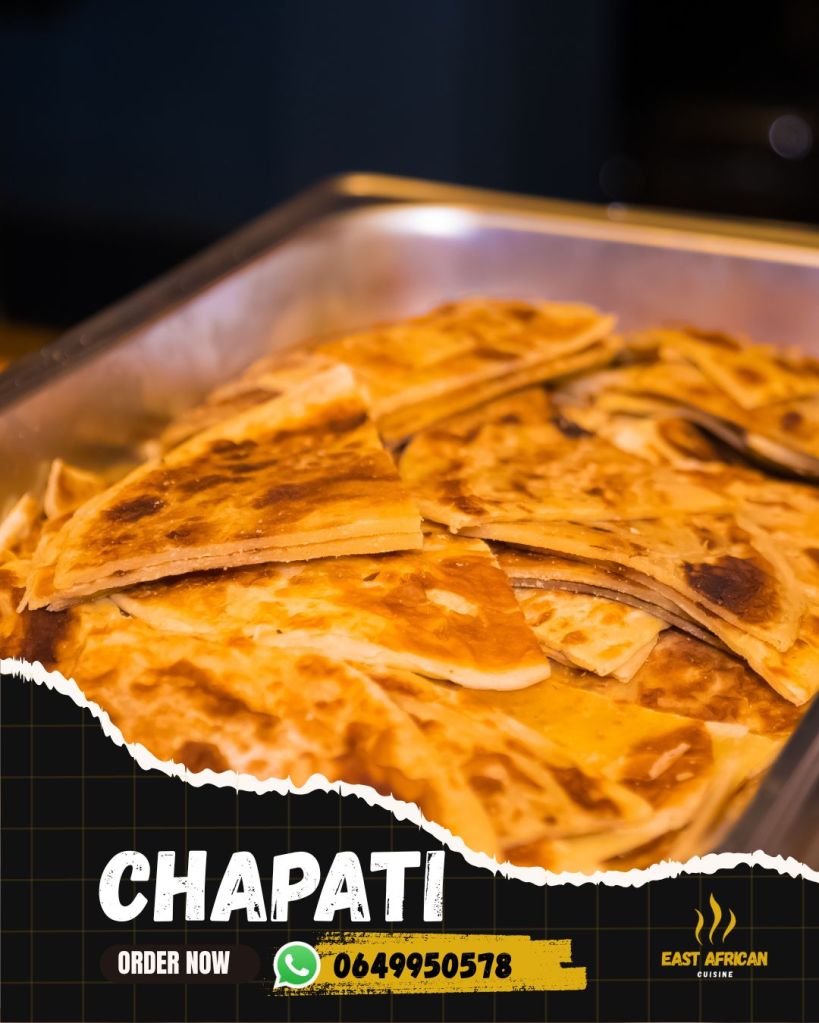
Chapati
A flaky, pan-fried flatbread with Indian roots that’s become entirely Kenyan. Made by rolling thin dough, brushing it with oil, coiling it, rolling again, then frying until it puffs and crisps. Used to scoop up stews. When it’s done right, it’s addictive.
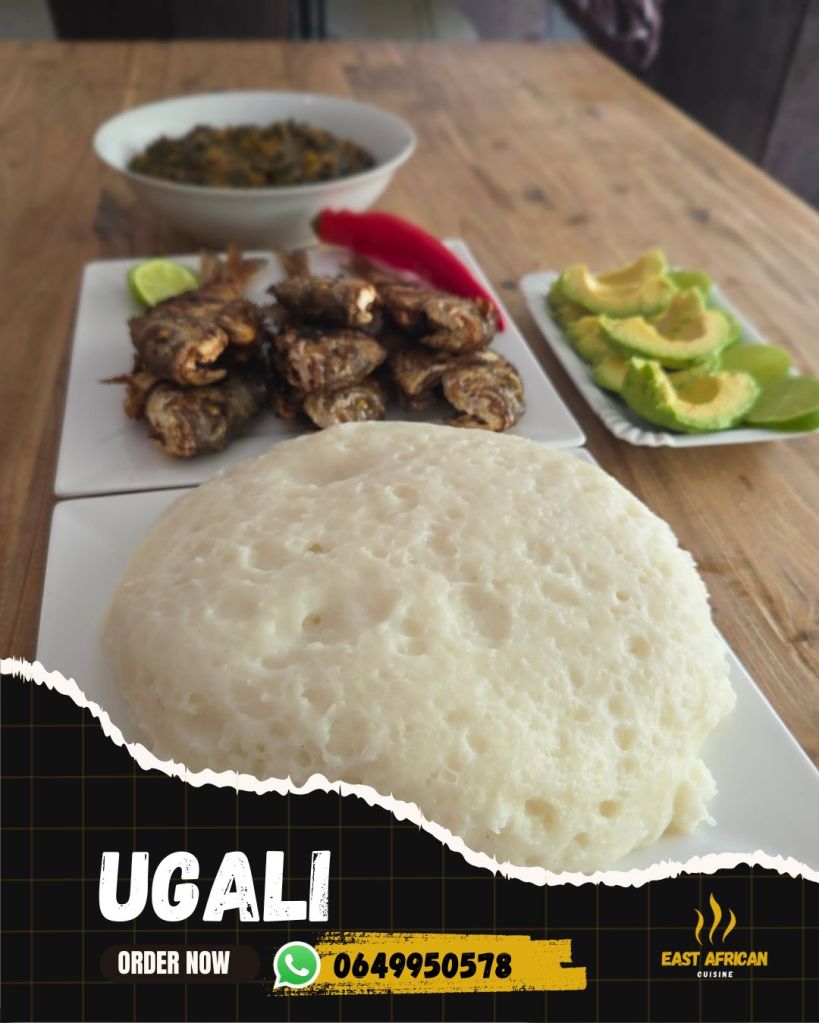
Ugali
A firm maize porridge that’s the heart of Kenyan home cooking. Eaten by hand. You pinch off a small portion, shape it to scoop up stew or vegetables, and eat it in one bite. It anchors the meal, the constant against which everything else is measured.
Samosas and Fried Snacks
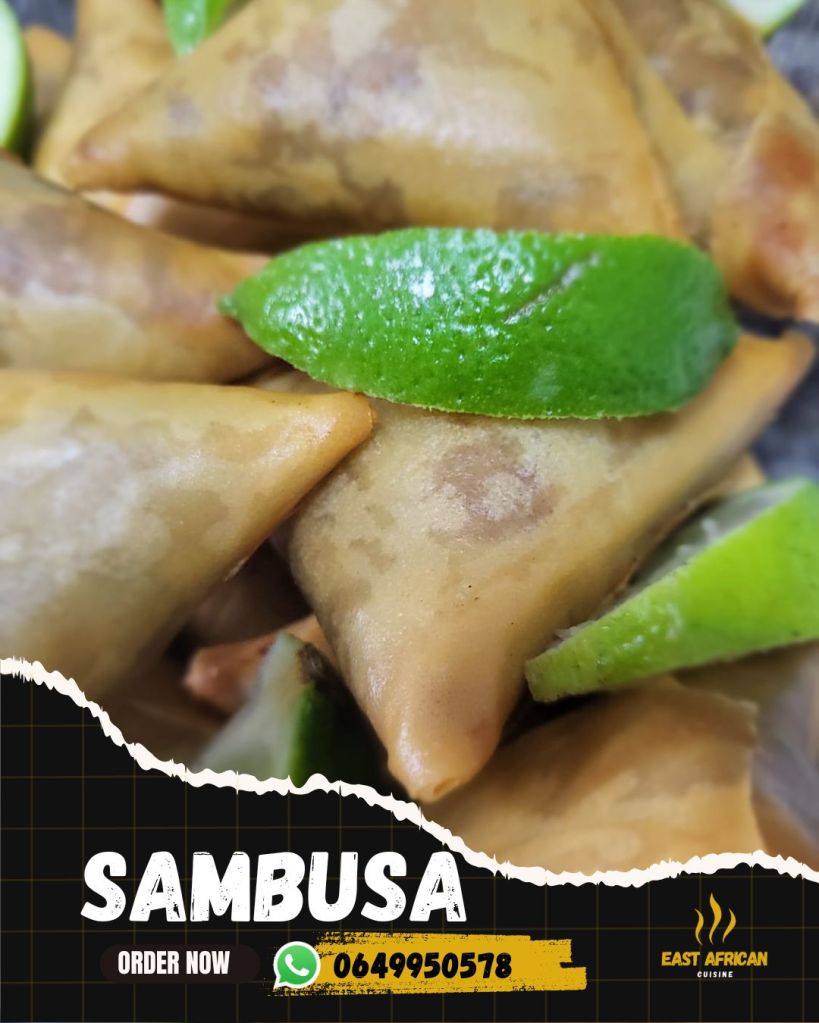
Crisp pastries filled with spiced minced meat or vegetables, plus pakoras, bhajias, and fritters. These aren’t fusion – they’re simply Kenyan now. A speciality of East African Cuisine, it reflects the country’s coastal region’s long conversation with Indian street food. Often, the first taste is what pulls Dutch diners deeper into the cuisine.
Nyama Choma (Grilled Meat)
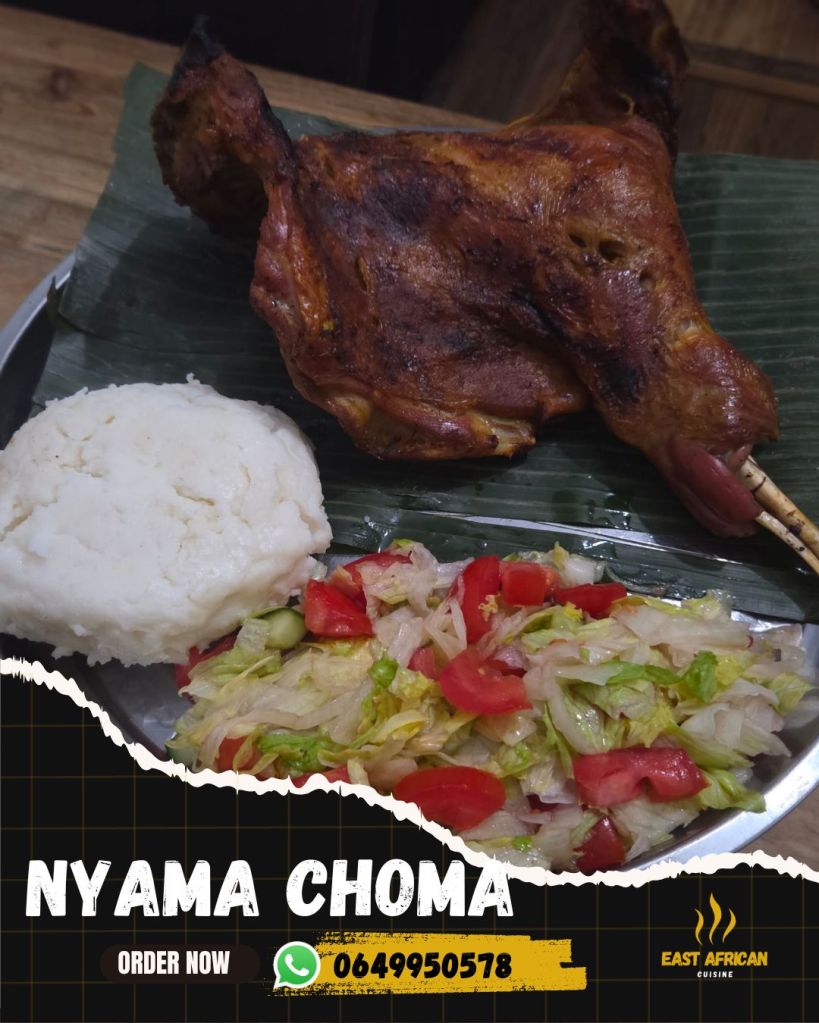
Kenya’s beloved grilled meat – usually goat, beef, or chicken – seasoned simply and cooked over charcoal. The name literally means “roasted meat” in Swahili, and it’s a social dish, meant for sharing.
Stews (Mchuzi)
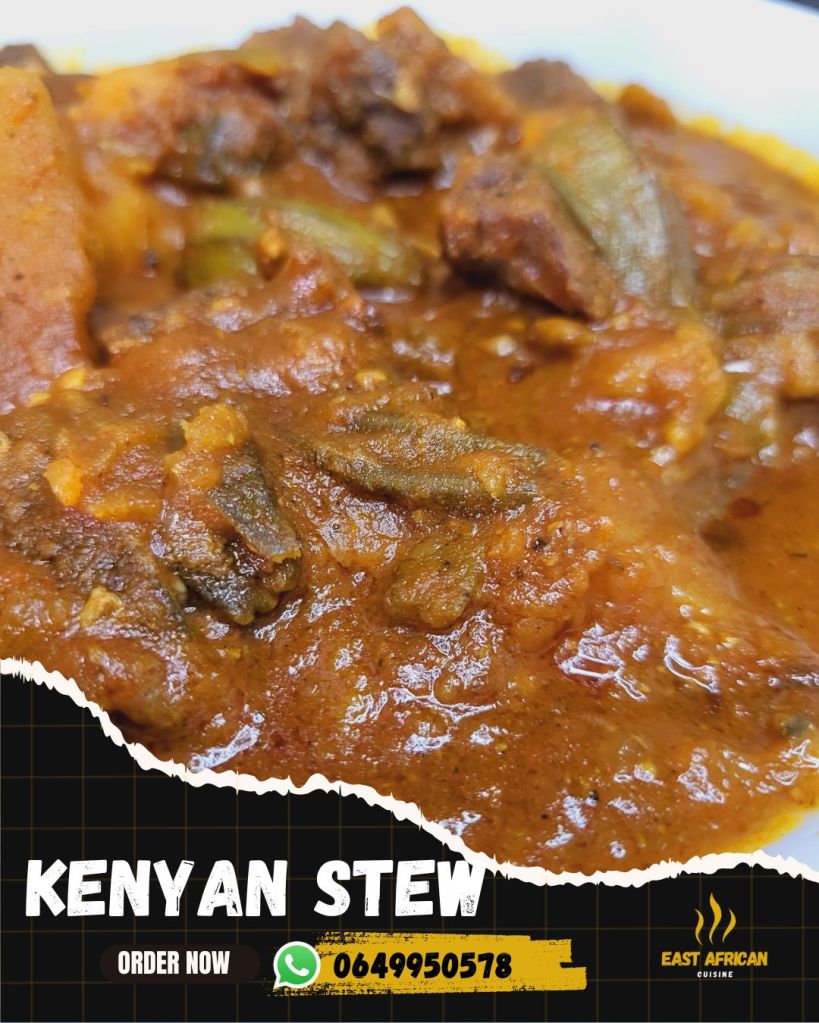
Slow-cooked meat or fish stews form the protein center of most meals. Beef, goat, chicken, or fish simmered with tomatoes, onions, and spices until tender. Coastal versions might include coconut milk; highland versions stay simpler.
Sweet Moments
Along the coast of Kenya, Swahili doughnuts, mahamri (cardamom-spiced fried dough), coconut bread, or simple fruit close the meal. The point isn’t elaborate dessert – it’s the moment of sitting together after eating, letting conversation stretch over strong tea, sometimes spiced with ginger or cardamom.
Where to Find Kenyan Food in Zuid-Holland
East African Cuisine – Rotterdam
What it is: A Swahili coastal-focused catering operation with a base on Veilingweg, bringing East African food to street markets, corporate events, and private celebrations.
What to expect: Menus heavy on biryani, mandi, Swahili doughnuts, Maamoul, samosas, chapati, pakoras, and fritters. They also assorted snacks and breads that make excellent impromptu office treats or dinner party additions.
View East African Cuisine’s Menu
The approach: More flexible and event-based than a traditional sit-down restaurant. They meet Rotterdam where it is, bringing Kenyan food to festivals, private events, and corporate lunches.
Best for: Discovering Swahili coastal cuisine through catering, events, or takeaways. Ideal if you want to introduce Kenyan food to a group or explore casually.
For more Kenyan and other African places see: Best African Food Delivery Services in the Netherlands (2026 Guide)
What to Expect When You Order Kenyan Food
Don’t expect: Thai-style heat, Indian curry intensity, or West African jollof rice. Kenyan food has its own logic.
Do expect:
- At the coastal-focused East African Cuisine: coconut, saffron, and Middle Eastern influences. Aromatic spices (cloves, cardamom, coriander, black pepper) that warm without overwhelming
- At highland-focused meals in The Hague: hearty, comforting stews and vegetables
- Balanced plates where starch, protein, and vegetables each play a role
- Food meant for sharing and eating slowly
- Generous portions – Kenyan hospitality assumes abundance
Eating with your hands: Traditionally, ugali and chapati are eaten by hand. Don’t worry – utensils are always available if you prefer, but trying it the traditional way is part of the experience.
From One Address to a Small Movement
What’s happening with Kenyan food in Rotterdam and The Hague isn’t dramatic or viral – it’s quieter than that, and maybe more durable. It’s a Dutch colleague discovering they like eating with their hands. A Kenyan expat finding chapati that tastes like home. A mixed family introducing their children to food from both sides of their heritage.
Pioneers proved Kenyan food could build a loyal following in The Hague without compromise. East African Cuisine is testing whether that model can scale in Rotterdam – whether biryani can show up at corporate lunches, whether Swahili doughnuts can become as familiar as stroopwafels.
The answer, so far, seems to be yes.
Ready to Try Kenyan Food?
For coastal flavors and casual exploration: Order catering from East African Cuisine in Rotterdam for your next event, or grab a takeaway meal to sample Swahili street snacks.
What to order first: If you’re new to Kenyan food, start with samosas and chapati (familiar entry points), then move to biryani or a meat stew.
The scent of cardamom and coconut is becoming part of Zuid-Holland’s everyday food landscape. The question now isn’t whether Kenyan food belongs here – it’s how many more tables, how many more meals, before it feels as natural as stroopwafels on a Saturday morning.
For now, the journey is simple: search, explore our menu and place an order, and taste what centuries of trade, migration, and adaptation have built.
Then come back for seconds.
 East African Cuisine
Leave a comment